The labs.
42 experiments on the primes and the zeros of the Riemann zeta function, in six groups. Each one runs entirely in your browser: nothing to install, nothing uploaded. Pick one and play.
The zeta function
7 labsWhere the zeros live, what they look like, and the one place a Riemann Hypothesis is actually proven.
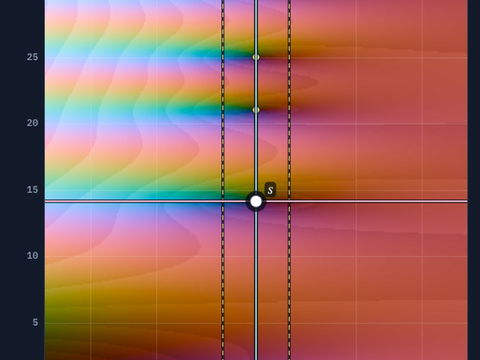
s-Plane Lab
Pick an input s on the left and see where zeta sends it on the right. Find the ½ line and the first zeros.
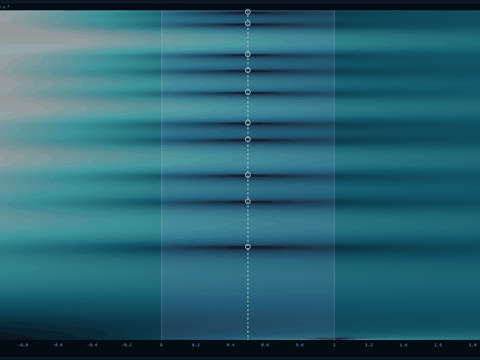
Zeta Landscape Lab
Zeta as a field over the plane: terrain, phase, and the curves whose crossings are the zeros.
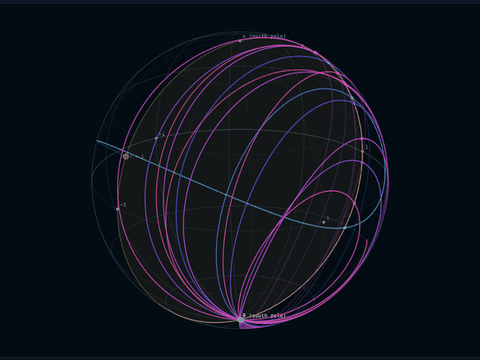
Zeta Sphere Lab
The zeta function on a sphere: its values on the Riemann sphere, a walk steered by its phase, the critical strip wrapped onto a ball.
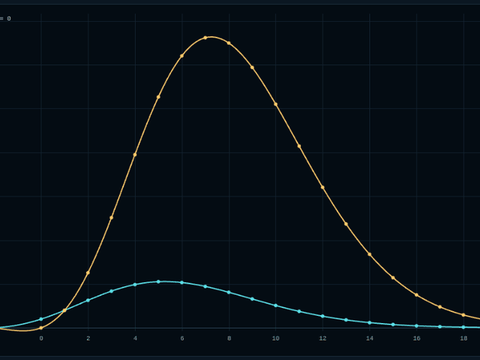
Dimension Lab
Spheres across dimensions: where a ball’s volume peaks and vanishes, and how the sphere factor makes zeta mirror-symmetric.
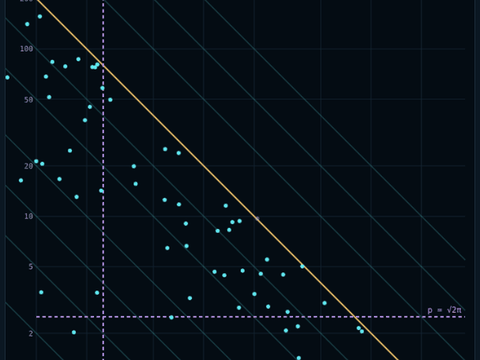
Stretch Lab
The stretching system behind the zeros: position times momentum, hyperbolic flow, and the region whose area counts the zeros.
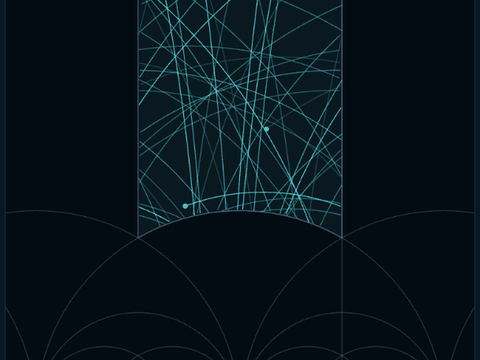
Saddle Lab
The modular surface, where a zeta function’s Riemann Hypothesis is a theorem: a bouncing path, closed loops as primes, pitches next to the zeros.
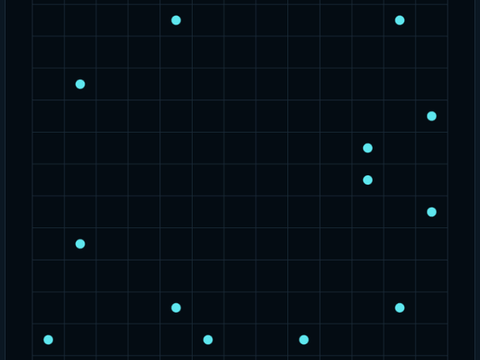
Weil’s World Lab
The one place the Riemann Hypothesis is proven: curves counted in clock arithmetic, with every zero sitting on its circle.
Networks
4 labsWorlds made of dots and connections, each with its own primes, zeros and Riemann Hypothesis. Build them, break them, check them by hand.
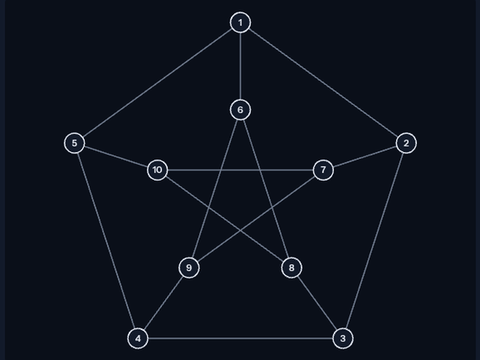
Zeta Worlds Lab
Network worlds with their own primes, zeros and hypothesis, with the real zeta on the same bench. Start here if you are new.
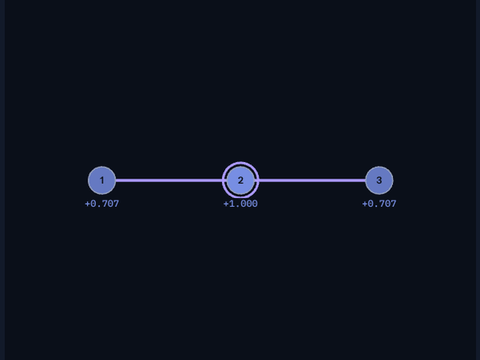
Swing Lab
Put an amount on every dot. A network only allows certain patterns, its modes, and each mode has one number, its swing.
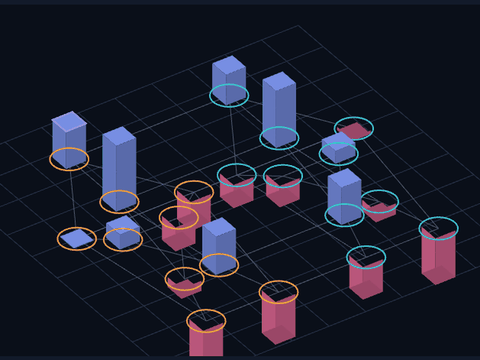
Balance Lab
Feed energy in at some dots and drain it at others. While gain and loss balance the zeros hold the ½ line; push past it and they leave in mirror pairs.
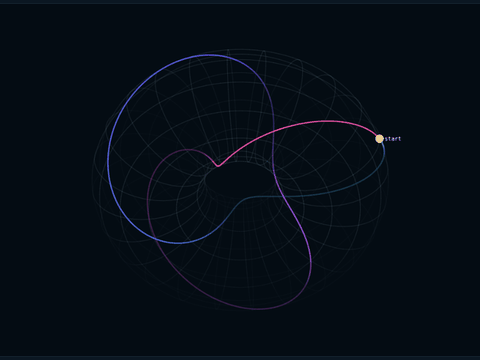
Knot & Network Lab
Closed loops that never repeat, three ways: torus knots, a network of loops that rings, and prime cycles on graphs.
Waves and strings
9 labsThe primes as a sum of waves, the zeros as the pitches of a string, and the exact bookkeeping that ties the two together.
-

Prime Wave → Zeta Lab
Watch prime standing waves morph in real time into the Riemann zeta function — spacing shifts from linear to log, amplitudes shift to 1+√n, and the zeros appear as silences.
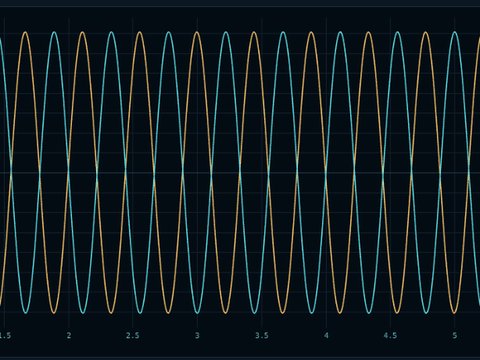
String Lab
Each zeta zero as a standing wave on the log-time string, tied down at x = 1, and the prime drift rebuilt from string modes.
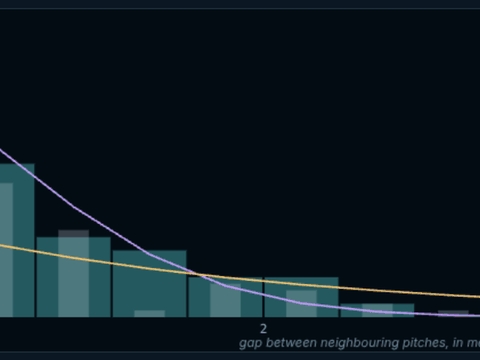
Comb Lab
One string with the primes as its medium: a bump at every prime. Its pitches computed exactly and scored against the zeros.
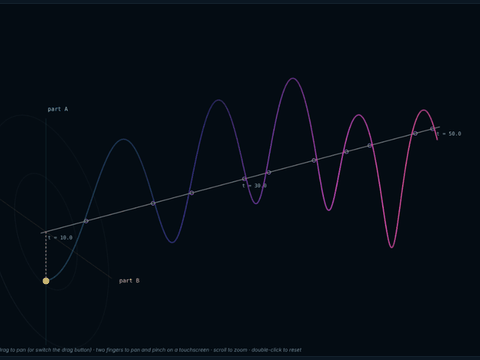
Prime Well Lab
A well of standing waves, one per whole number. Add them up, hear what the well rings at, and watch its silences land on the zeros.
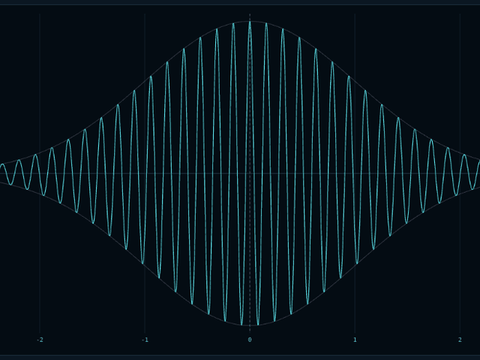
Superposition Lab
Add up windowed cosines for any list of frequencies: the zeros, the integers, the primes or your own, at a resolution that never aliases.
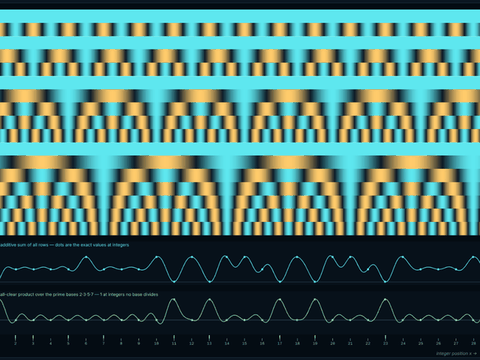
Prime Overtones Lab
Each prime’s divisibility wave split into its overtones, and the mirror picture where the primes are the overtones of one fundamental.
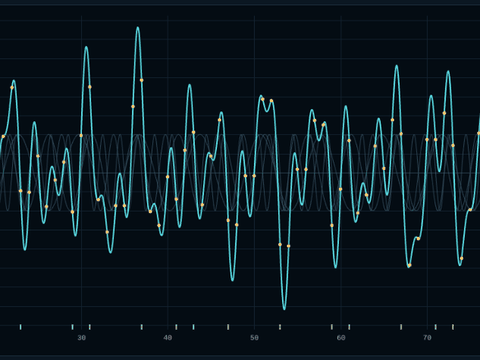
Prime-Power Wave Lab
Four views of one interference: prime-power waves, prime holes, zero waves rebuilding the drift, and the drift’s spectrum in log-time.
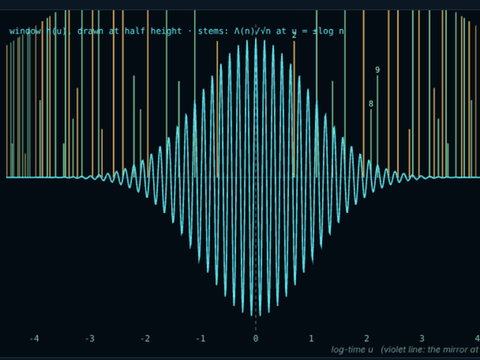
Balance Formula Lab
Weil’s explicit formula as an energy balance: prime echoes at log-time delays, the mirror term, and the response summed over the zeros.
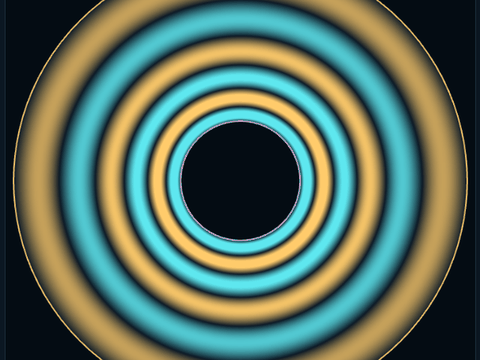
Ring Lab
A ring that breathes: waves going out and back between an inner and an outer rim, measured in log-radius. The log-time string in polar form.
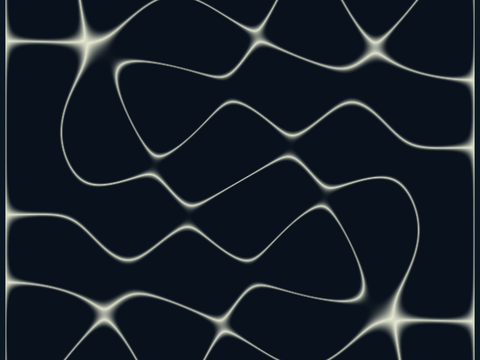
Cymatics Lab
Sand patterns on a square drum. Its pitches are the sums of two squares, so which patterns exist is decided by the primes.
Runners and games
6 labsThe two-dot bounce game and everything that grew out of it: runners on a line, loops on circles, hills at the primes, and dials for every rule.
Bounce Lab
The two-dot game at scale: up to a hundred thousand runners, the standing waves they form, a movable sensor and a live waveform.
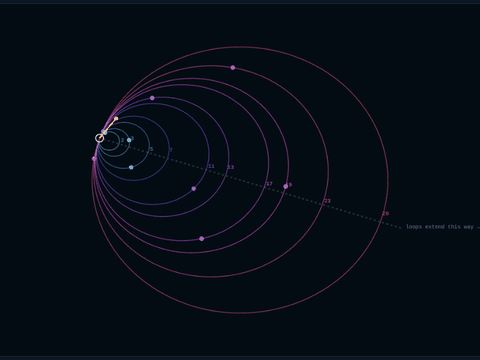
Loop Lab
The bounce game on circles: every number a loop of its own length, all kissing at one point, a dot running round each. Who comes home when?
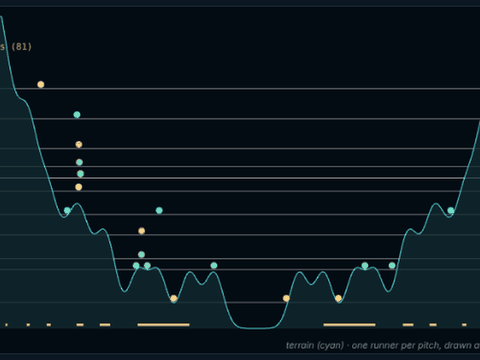
Terrain Lab
The bounce game with the line pushing back: hills at the primes, runners that slow and turn on them, pitches scored against the zeros.
Playground Lab
The back-and-forth substrate with every rule exposed: speed, weight, phase, clock, fold and space are expressions you type.
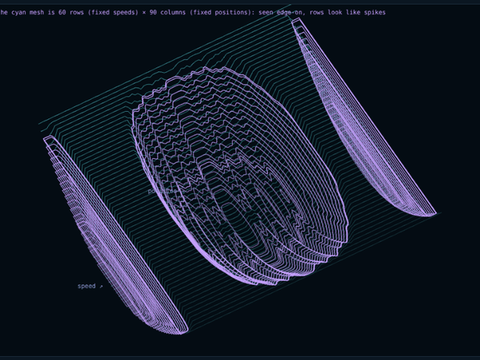
Shape Lab
Any terrain setup as a shape: its pitches, every standing wave stacked in 3-D, the struck string over time, the runners’ swirl.
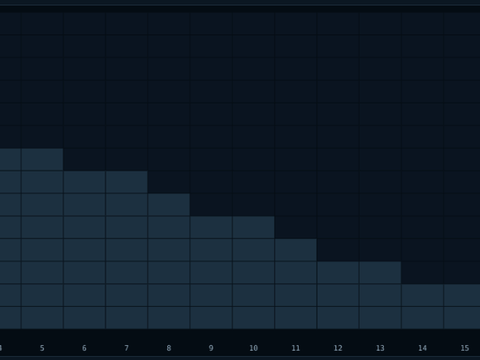
Two-Unit Lab
Numbers built from 2 and 3 alone, as a lattice, a set on the line and a waveform, and what a world with only two primes rings at.
Spheres, shells and domes
8 labsZeta and the primes drawn on spheres and layered shells: the ½ shell, loops that unfold, domes built from the first prime to the last.
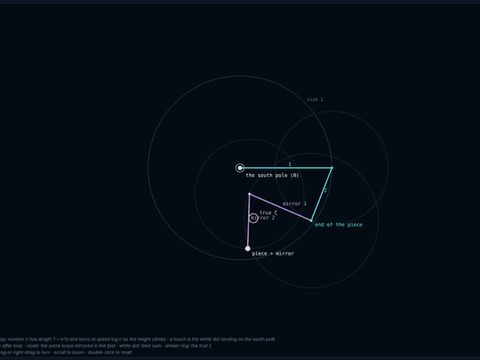
Sphere Shell Lab
Every size σ as its own sphere: the paths of ζ and its look-alike on nested shells, the loops of the ½ shell measured one by one.
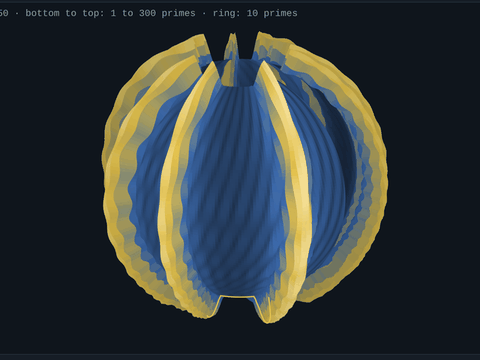
Shell Measurements
The same shells, measured instead of drawn: every number for ζ and for the Davenport–Heilbronn look-alike, side by side.
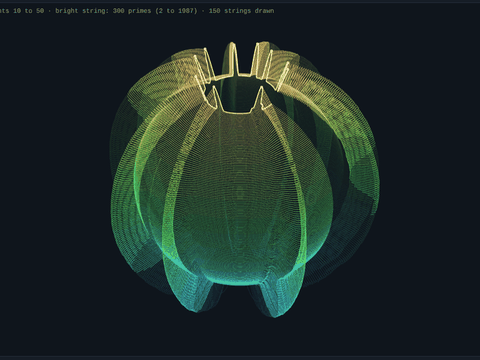
Strings Globe
ζ built from the primes one string at a time. Each string runs once round the globe and bulges where the first primes come close to zero.
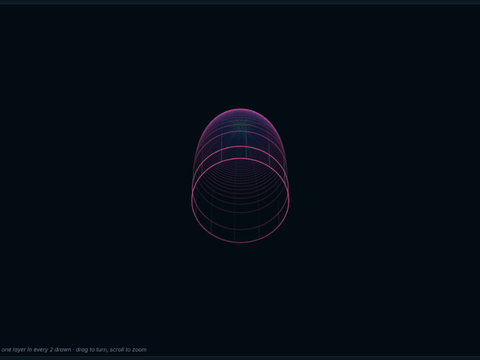
Layered Dome Lab
Build a dome or a fan of layered loops from a first and last prime, ring it, and test whether its pitches are the zeros.
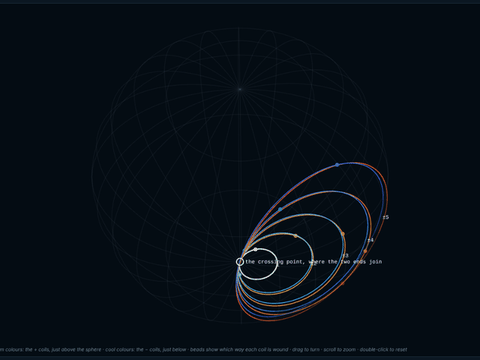
Loop Growth Lab
A sandbox for stacked loops that grow on a sphere and unfold. Choose what each set contains and how it grows.
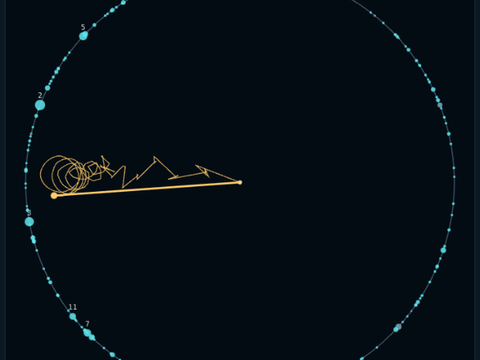
Projector Lab
The primes as a projector, each thrown from the centre onto a surface. On a ring this is the Euler product; on a sphere or torus a sandbox.
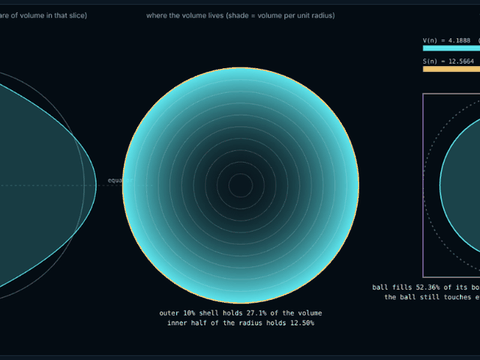
Ball Shape Lab
The n-dimensional ball and its sphere changing shape with the dimension: the slice profile, where the volume lives, how much of the cube it fills.
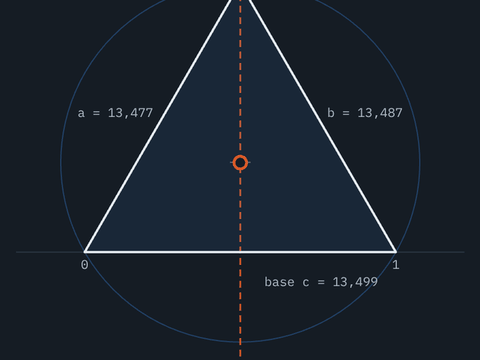
Prime Triangle Lab
Three neighbouring primes make a triangle whose apex sits a hair left of the ½ line. Add the gaps up and the pen draws a wave whose tones are the zeros.
Prime Atlas
8 labsWhere the site began: the fixed grid of prime-power coordinates, integer fingerprints, gap skeletons and branch geometry. The atlas keeps its own home page, paper and methods.
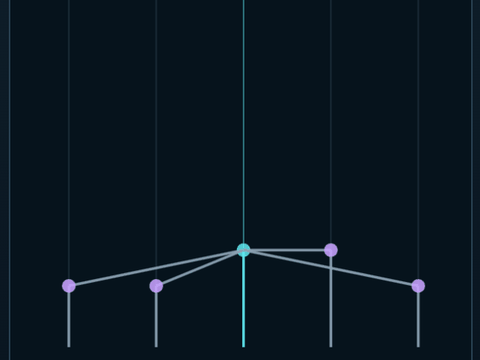
Prime-Factor Power Matrix
The fixed coordinate grid, built through any N: fingerprints, gap skeletons, gap balance and the boundary rollout test.
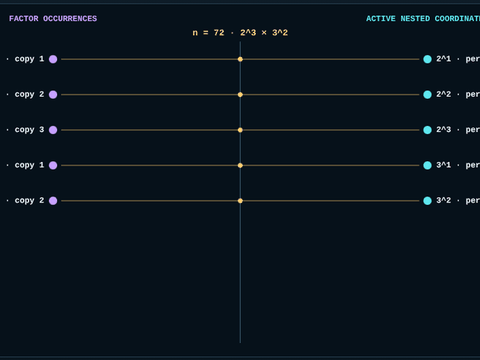
Factor–Power Certificate
A row-level audit of the exact factor-to-coordinate correspondence, kept separate from the open question of gap half-balance.
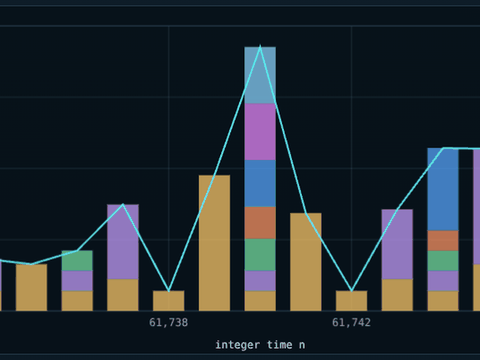
Wavefield and Finite Zeta Reconstruction
The prime-power strike field as waves, skeletons, clumps and spectra, compared with a reconstruction from tabulated zeta zeros.
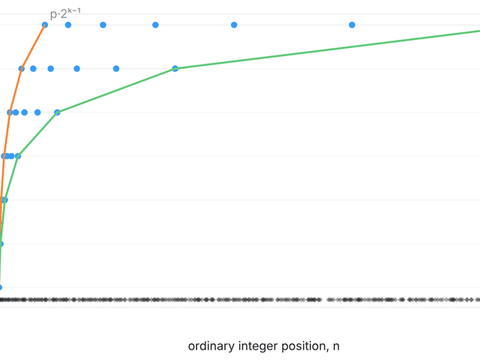
Branch Envelope Law
The terminal-branch envelope law, stated and drawn.
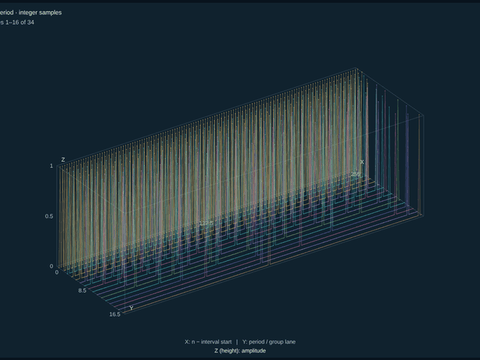
3D Branch Space
Complete branch layers and long segments on one shared scale, rotatable in three dimensions. Large page; best on desktop.
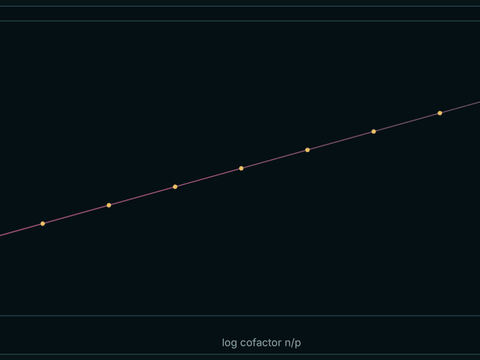
Branch Rays
The complete terminal branch of a seed prime and the rays into it.
Branch Clumps
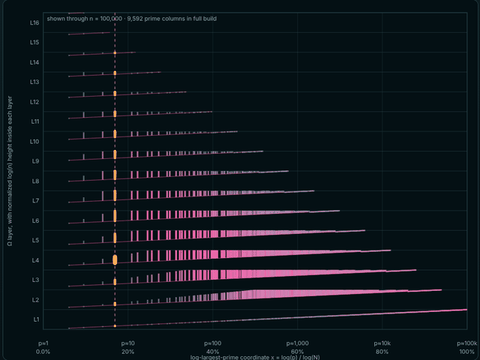
How branch-layer clumps grow: every integer once, Ω for its layer, log LPF for its column.
Layer Wall Builder
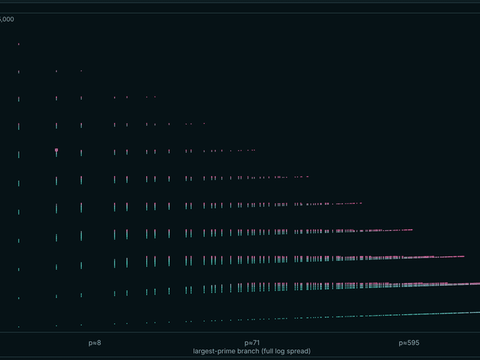
Watch ordinary integers arrive one at a time in the log branch coordinate, with synchronised linear and frozen-angle panels.